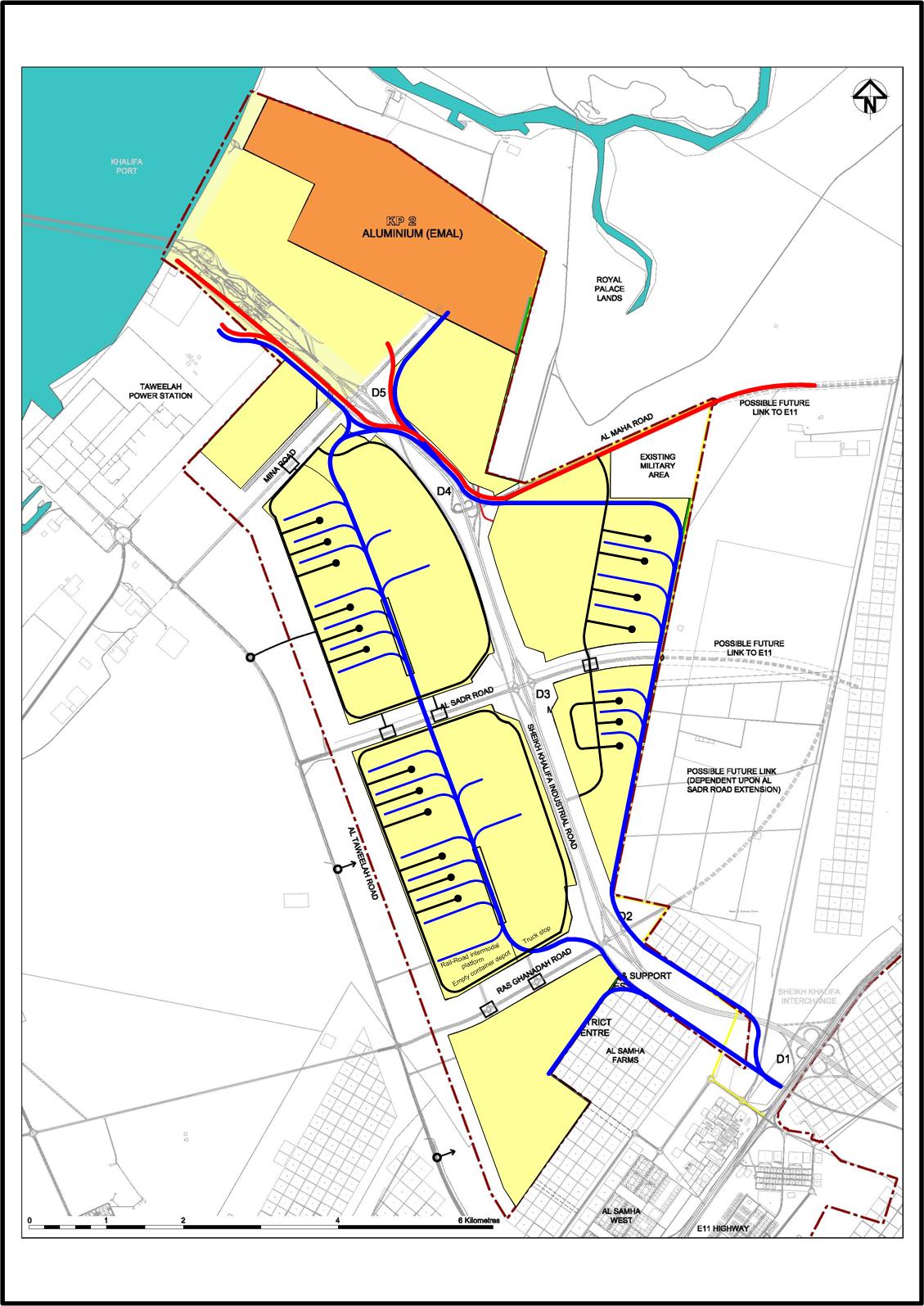
The new Port of Abu Dhabi and the adjacent Khalifa Industrial Zone (KIZAD) mark a cornerstone of Abu Dhabi’s economic development plan 2030. Implemented in stages, KIZAD ultimately will cover an area of 400 km2 to provide space and infrastructure for diversified industrial production. Other than most port-related developments in the Gulf area, Port Khalifa and KIZAD will closely link up with both, the international markets and the GCC hinterland. Therefore, integration of logistics infrastructure and logistics services will be paramount to success. The master planner for KIZAD contracted ADI to help designing a competitive logistics offering.
ADI put user and market requirements first, both for own logistics operations of manufacturers and for logistics services provided by professional logistics companies. As a result, a large scope of logistics activities and services was identified as input for allocation of land for dedicated or shared, and for own or third-party managed warehouses. Transport requirements were translated into concepts for road layout design, port access, yards for trucks, containers, and services available throughout the industrial access. The applied logistics integration design avoids creating isolated logistics clusters, instead it allows close and flexible integration of logistics activities with the manufacturers’ processes and facilities.
Being located adjacent to the new Port Khalifa , manufacturers in KIZAD will export many products ,but due to their size and diversity, also be a significant source of shipments into its hinterland. With the upcoming GCC rail network in mind, ADI ensured that not only the port itself, but also all of KIZAD based manufacturers will have rail access – creating a competitive advantage for manufacturers by providing the choice of different transport modes. Depending on the type and size of manufacturer, the design allows direct rail integration into manufacturers’ land plots or access to optimally located multi-modal road-rail terminals. At the same time, the design minimizes interference between rail lines with roads.