In order to cope with the forecasted demographic growth, the Kingdom of Saudi Arabia invests into large projects aiming at creating job opportunities in diversified manufacturing and services industries. Key to these developments are the Economic Cities (EC) aimed at promoting a balanced regional environment, job creation, economic diversification, and increasing global competitiveness.
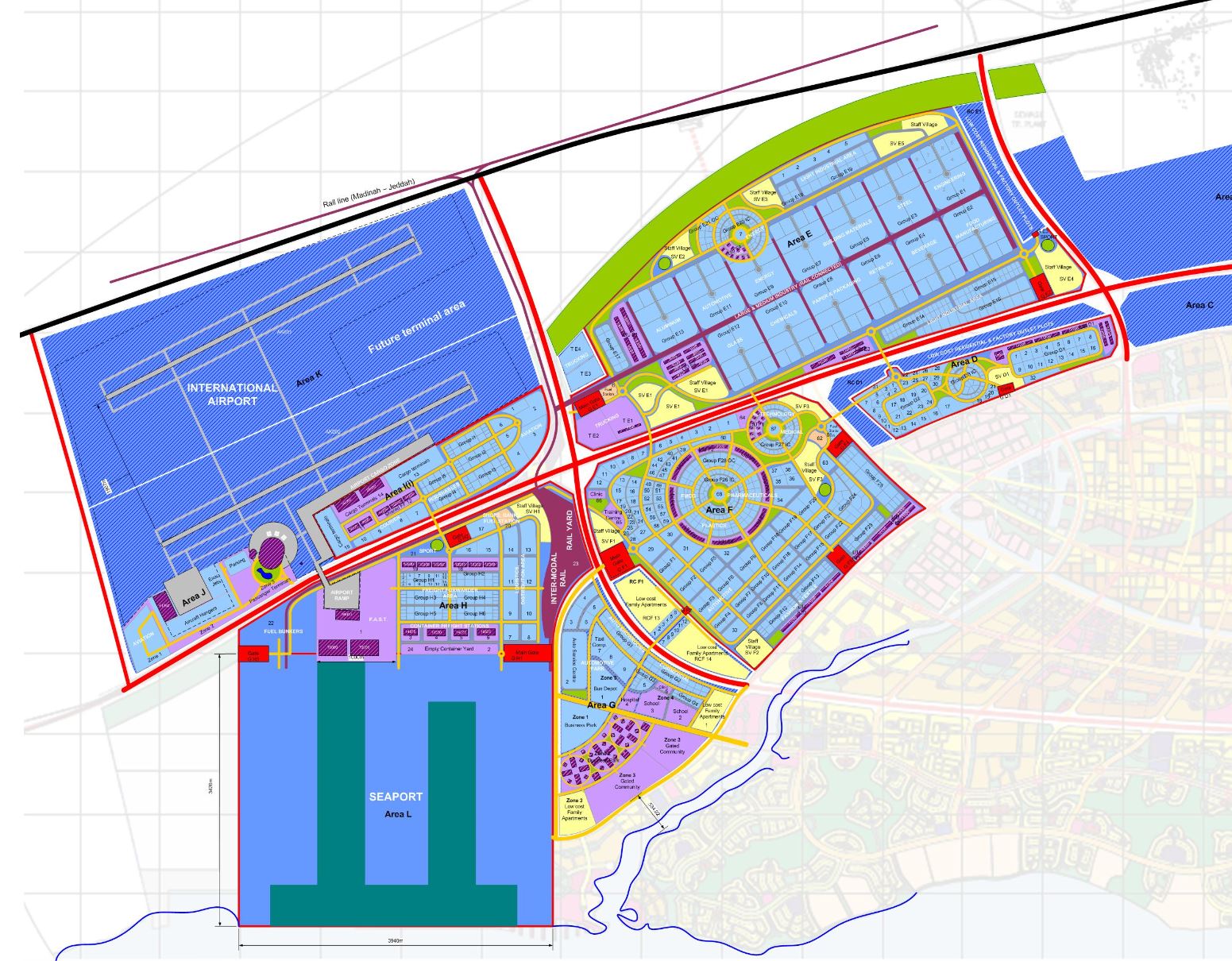
Newly developed Economic Cities need to attract local, regional and international investors to build up diversified industry and trade, and therefore need to capitalise on their USP of favourable geographic location. A state of the art logistics infrastructure and a flexible regulatory environment for logistics activities will be key enablers for creating competitive Economic Cities. ADI and its local partner Himmah gave key input for a design of King Abdullah Economic City KAEC that makes sense for all industry sectors. The design aligned port, road, rail and the future airport infrastructure into an effective multi-modal platform to optimally serve industry and traders. SAGIA, the Saudi Government Investment Authority, also asked ADI to develop a competitive legal framework for creating effective logistics hubs in Economic Cities.
As a result of a comprehensive benchmark analysis of several different world-wide Transport and Logistics (T&L) legal codes and best practices, ADI developed the EC transportation and legal framework. This framework serves as a guide for all T&L related planning, implementation, operations and management activities of the Economic Cities in the Kingdom of Saudi Arabia. It outlines the main T&L categories and sub-categories of activities and regulations which need to be developed to properly serve the Economic Cities’ T&L sector.