The Government of Saudi Arabia proactively supports the development of the non oil and gas industries, thereby aiming to diversify the KSA economy. As a result, the growth of most industrial sectors has accelerated, therefore these sectors are expected to grow by almost 10% p.a. during the next decade. The Saudi Seaport Authority (SEAPA) wants to ensure that the Saudi port infrastructure and the related services can cope with this development and have assigned W.S. Atkins with the development of 2032+ master planning for the King Abdulaziz Port – Dammam and the Jubail Commercial Port. W.S. Atkins selected ADI as their partner for logistics aspects in this task: to embed the planning into a comprehensive market analysis – to determine the market positioning of the ports and their services – and to ensure a competitive hinterland integration for the ports.
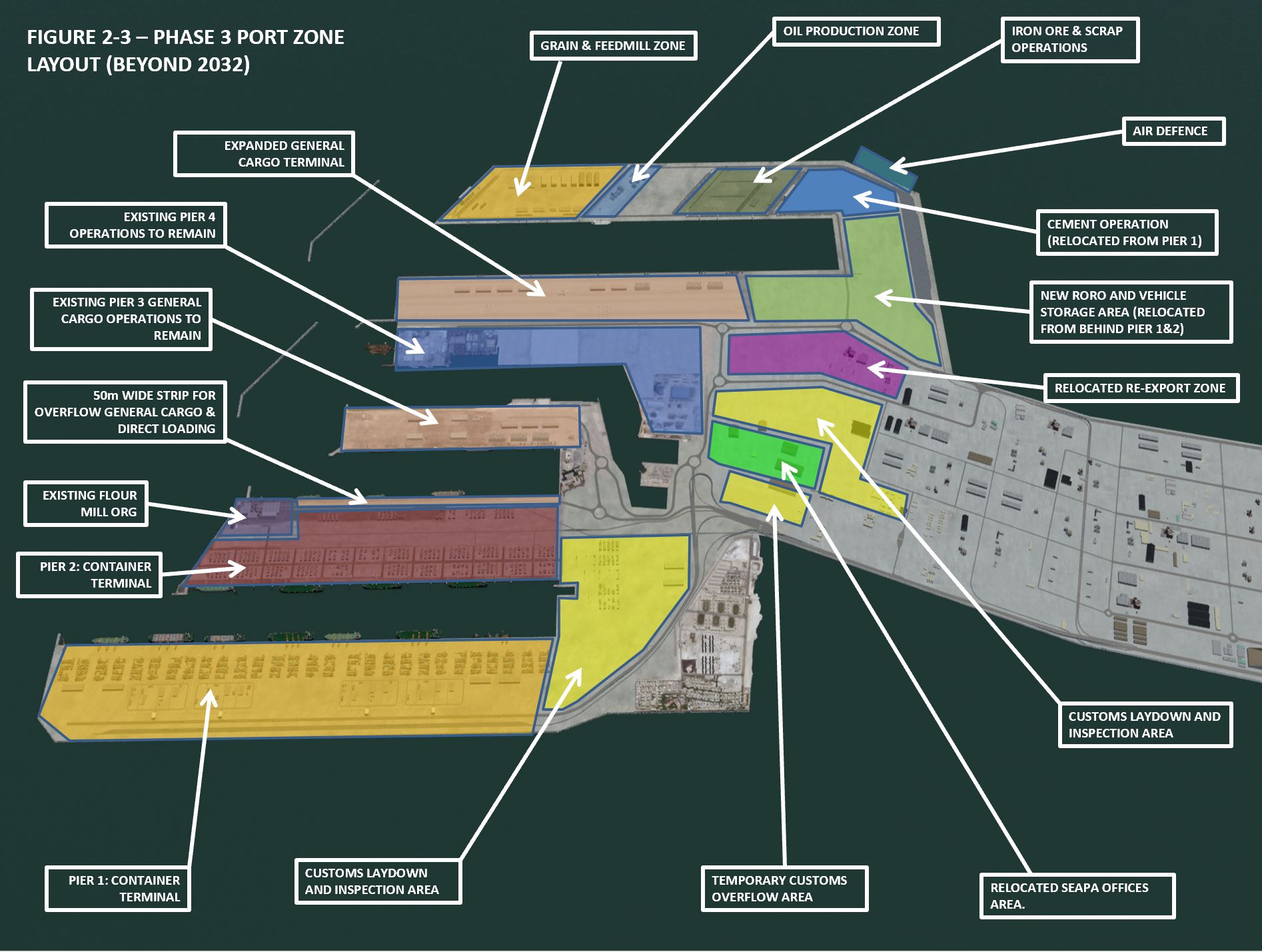
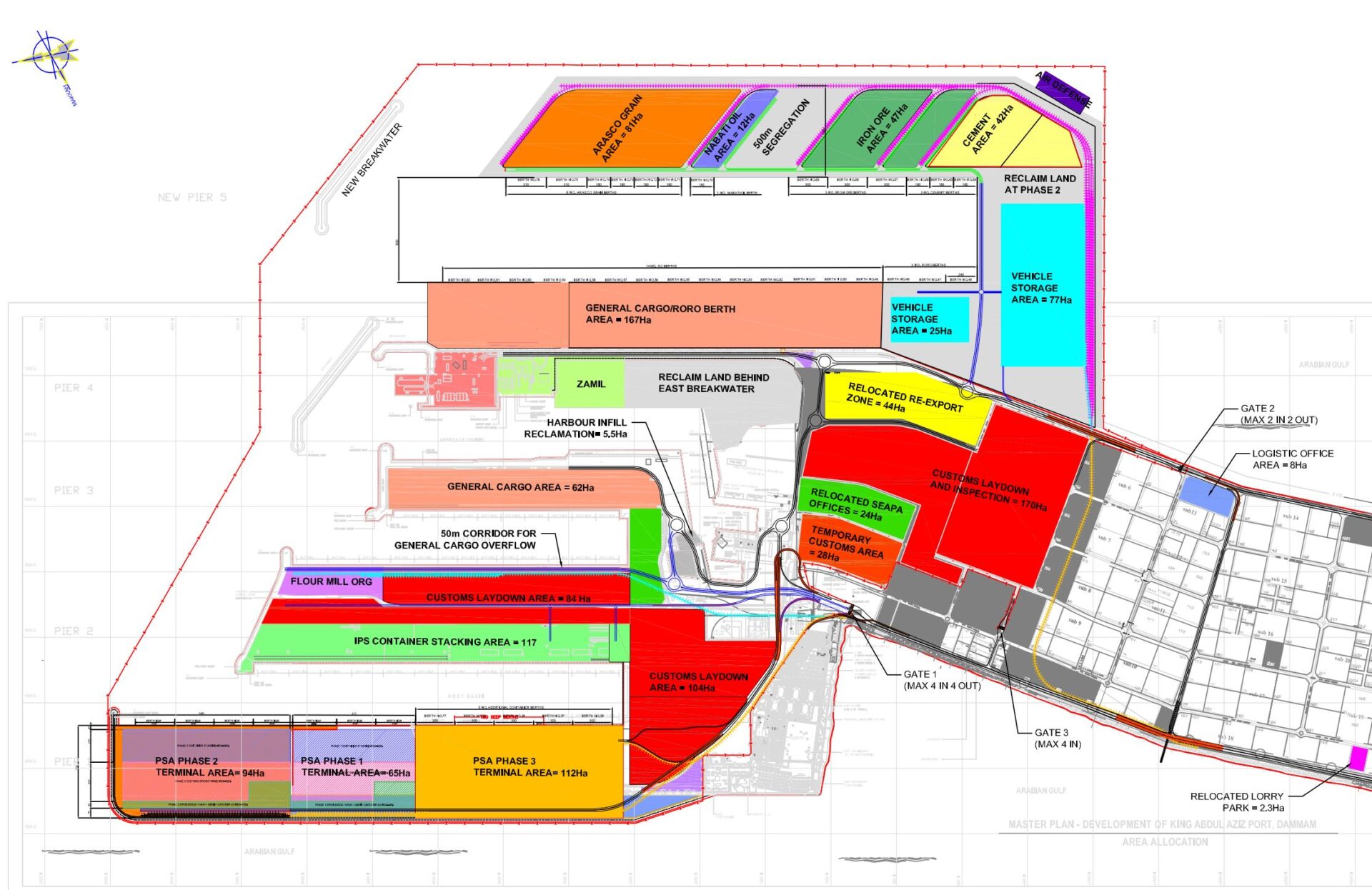
ADI focused the market analysis on both, the port developments in the region as well as on the development of industries and infrastructure in the hinterland. Based on ADI’s experience in the GCC (Gulf Cooperation Council), a very specific focus could be derived for the market positioning of each of the ports, and volume forecasts for the individual commodities to be handled in the ports could be adapted to reflect the individual needs of the port users. With this input the high-level master plan options could be developed as a basis for discussion with SEAPA and the involved stakeholders.
In a second step, ADI led the in-depth discussion with the stakeholders (major shippers and terminal operators) for aligning their supply chain processes and the infrastructure in and around the ports. An important focus of this work was to enable the stakeholders to fully integrate with rail services and rail infrastructure within the port and in the hinterland. As a result, the port master plans include the detailed alignments for rail infrastructure to be implemented short term and the corridors to be reserved for future rail integration for further commodities. As ports are a key element in shipper’s supply chains it was important that ADI again could make sense of logistics in these projects, as a prerequisite for KSA to grow their industries.